
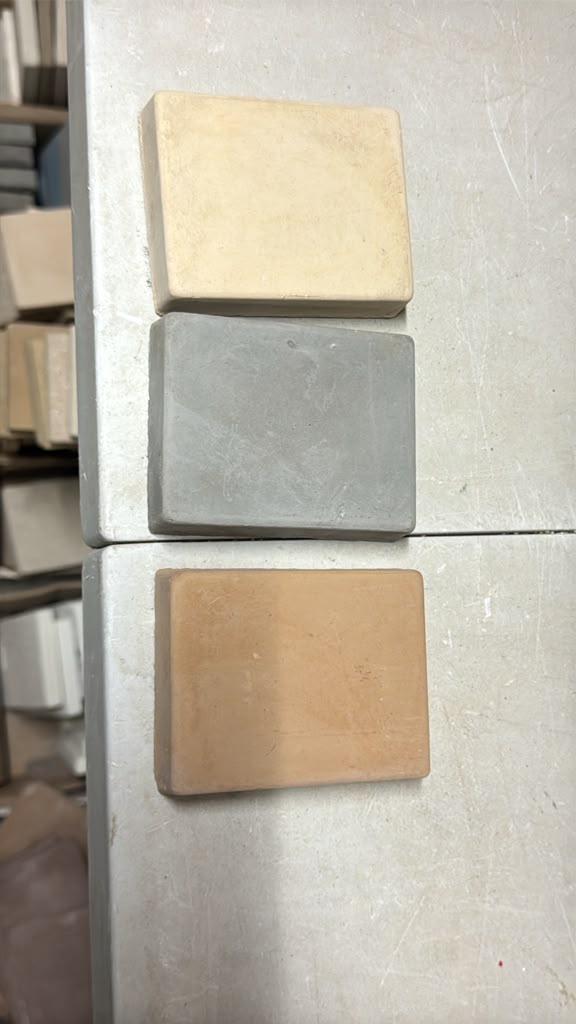
Ask for a named color plus a named finish. A standard precast sample is a small square swatch; it does not need a catalogue model code.
First choose the color family
Start with the material the precast will sit beside: the brick at a window, the stucco at a cornice, or the paving beside a cap. Compare that neighbour with Landmark’s 19 photographed Smooth colors. Use the screen to narrow the choice, not to approve an exact match.
Then choose how the surface should read
Smooth gives an even face. Limestone has a fine, soft texture; Sandstone is more granular; Travertine has a more open texture. Those are the four names of Landmark’s precast finishes. Selecting Limestone here means a limestone-textured precast sample, not a sample of quarried limestone.
Compare in the location that matters
Put the sample next to the actual adjacent material. Hold it upright for a wall application and flat for a horizontal detail. Look once in direct light and again in shade. If two people are reviewing it, mark the color and finish on the back so that “the light one” does not become the specification.
Order the right kind of sample
Use the precast form for a color-and-finish square. It asks for a phone number and delivery address so the team can confirm the request. Natural stone veneer, pavers and marble have their own material review; the precast finish menu doesn’t apply to them.
- Record both names, for example Alpine White + Smooth.
- Note the product and neighbouring material if you want guidance.
- Keep the reviewed physical sample with your project notes.